
Written by Oscar Arkeveld
We are all born to die consumers…perhaps a more dramatic way to look at consumerism but you know the saying: shop til you drop. The fact remains that we as people buy things. Shopping is simply a part of life, and in most cases it’s fun, for a while at least. New purchases act as treasures, something else that we can say is ours. We admire the things we buy up until the point where this reverie turns to a haze of normalcy. Dissatisfaction grows, the craving for newness creeping in and the desire to buy ever so present once again.
This is a constant cycle, continuously exacerbated by the companies selling these supposed “treasures”. Never-ending marketing campaigns push messages to “Buy this!”, “Buy now!”, “Buy more!”. Companies recognize how the high of a new purchase is fleeting and bank on the insecurities of consumers to keep them feeling like one more thing is all they need to feel happy again. This is uber-consequential in that it promotes a culture of rapid overconsumption with a complete disregard for sustainability.

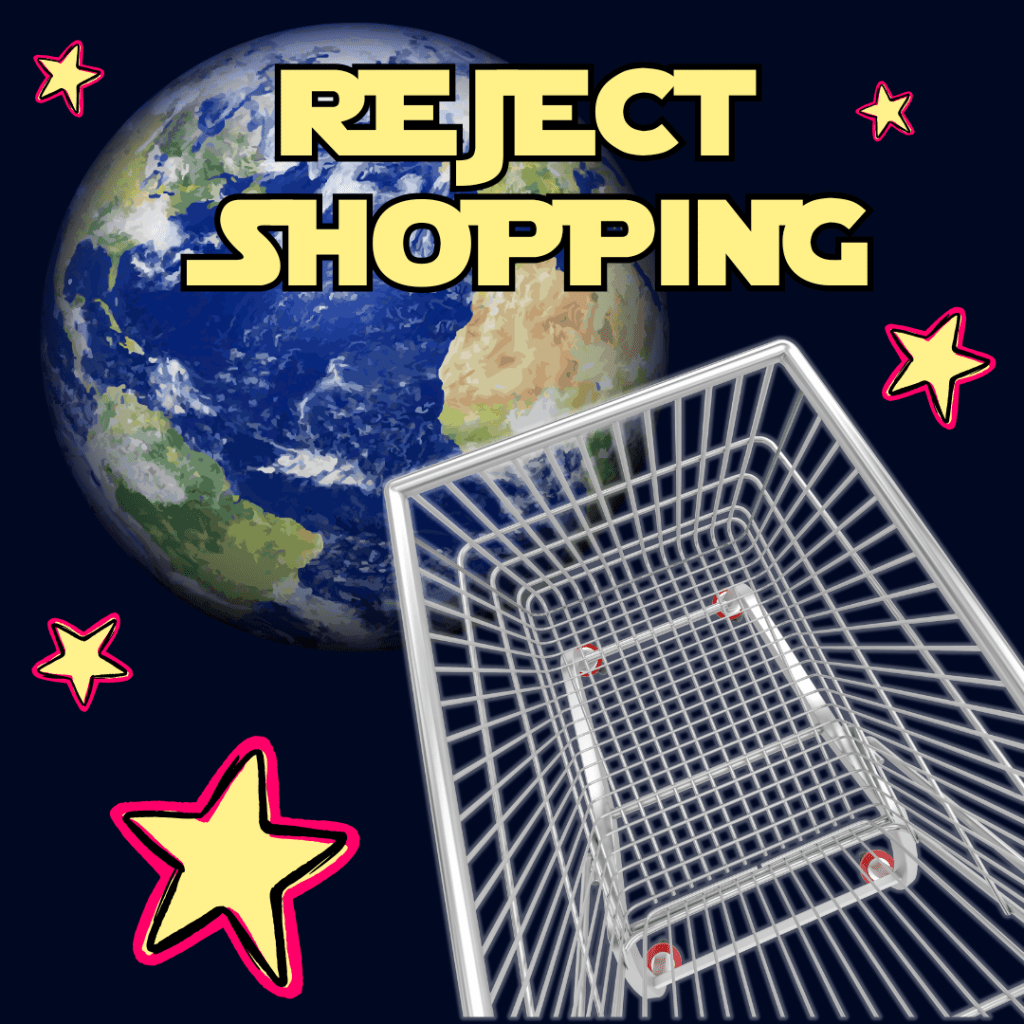
Illustration by Julia Petrielli
Despite this recognition, our love for new things remains and so does the itch to find them. Enter Reject Shopping. Reject Shopping is the practice of shopping with the intention to buy nothing. This sounds counterintuitive, but it provides a way to enjoy the experience of shopping and the fun of finding cool items, without actually consuming. Shopping this way involves recognition, a realization that a shirt you have found could certainly be a nice addition to your wardrobe, but you already own many other shirts that you had the same feelings for. This allows for a more conscious approach to buying new items, causing you to think about the necessity of a new thing and its long term value in your life. As such Reject Shopping is an act of defiance, a removal of oneself from the perpetual cycle of consumeristic hell, pushing against the narrative that we always need more. In a less radical light, it is also a way to save money!
My intention in writing this is not to shame people for buying things and being consumers, the contrary in fact. My intention is to highlight how companies take advantage of people to get them to keep buying new things and how we as consumers can remove ourselves from this cycle. The next time you feel the desire to buy I urge you to try Reject Shopping. You may just find that even without buying anything, you still enjoy the experience and still ultimately gain.
 STOMP Magazine
Leave a comment